April 2026 | Suva, Fiji
In Fiji, a traditional voyaging canoe is carrying more than sailors across the sea. It is carrying a message of survival.
More than 1,400 people across Fiji are expected to receive climate resilience training through Soko ni Nuinui (“Sails for Hope”), a new initiative launched on 11 April at Suva Point by the Climate Commission of the Anglican Church in Aotearoa, New Zealand and Polynesia.
The programme combines Christian theology, climate science, and indigenous Pacific knowledge to help communities respond to the growing realities of climate and ocean change across the region.
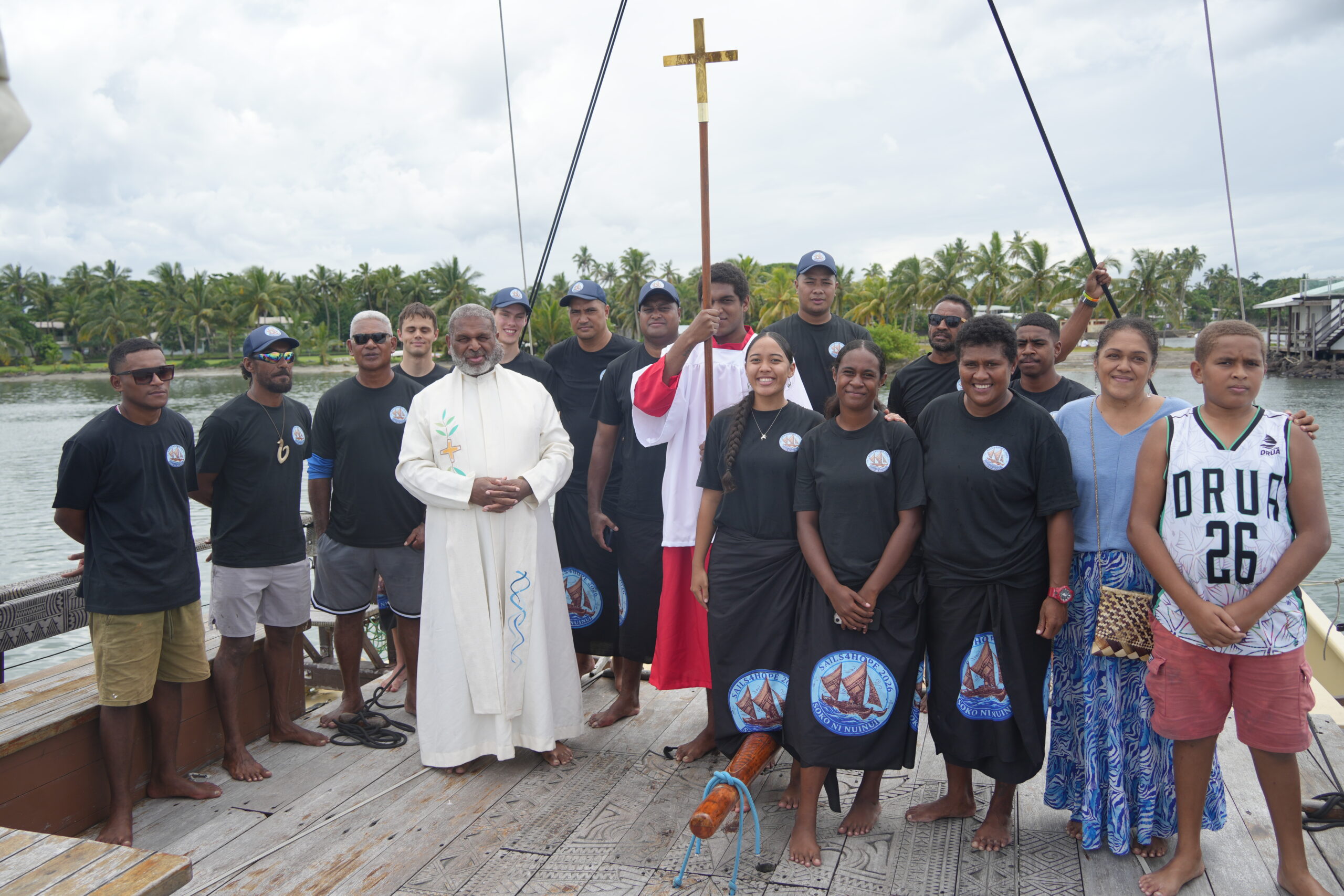
At the centre of the initiative is the voyaging canoe Uto ni Yalo, which has become a floating classroom travelling from community to community throughout Fiji. Carrying facilitators, learning materials, and church leaders, the canoe is visiting Pacific Harbour, Sigatoka, Nadi, Lautoka, Ba, Savusavu, Labasa, Levuka, and Suva over a 50-day journey.
As the canoe arrives in each location, local Anglican churches and community groups gather for workshops focused on environmental stewardship, practical resilience, and cultural identity.
The launch at Suva Point was led by the Vicar of St Luke’s Anglican Church, who described the initiative as both a spiritual and practical response to the environmental challenges facing Pacific communities.
“Our relationship with the ocean is not separate from our faith, our identity, or our future,” he said. “The Moana connects us, feeds us, and teaches us our responsibility to care for creation and for one another.”


The programme comes at a time when many Pacific communities are already experiencing the effects of climate change through coastal erosion, rising sea levels, flooding, and increasing pressure on marine ecosystems. Recent weather events, including Cyclone Vaianu, have further highlighted the vulnerability of island and coastal communities across Fiji.
Rather than relying solely on outside expertise, Soko ni Nuinui uses a “train-the-trainer” approach designed to empower local leaders to continue the work within their own villages and parishes long after the canoe departs.
Participants take part in Bible study, talanoa sessions, environmental discussions, and practical learning activities that blend scientific understanding with traditional Pacific knowledge systems.
The initiative is centred on the theme “We Are the Ocean,” encouraging communities to see the ocean not simply as a resource, but as an extension of identity, ancestry, and shared responsibility.
Facilitators from the Diocese of Polynesia and the Diocese of Wellington guide participants using a specialised learning manual developed for the programme. Communities are also invited to make collective commitments towards ongoing ocean stewardship and climate action through a wider Pacific support network.


For many involved, the use of a traditional voyaging canoe carries symbolic significance.
Long before modern borders existed, Pacific ancestors crossed vast oceans guided by stars, currents, and inherited knowledge. Organisers say Soko ni Nuinui draws on that same spirit of navigation, resilience, and connection to guide communities through the uncertainties of climate change today.
Despite delays caused by Cyclone Vaianu earlier in the journey, the programme has continued throughout Eastertide and is expected to expand beyond Fiji to Aotearoa New Zealand and Tonga later this year.
As Uto ni Yalo moves across the islands, the initiative is offering more than training sessions. It is creating spaces for communities to reflect on what it means to protect the ocean that has long protected and sustained Pacific peoples in return.


Credit: Adapted from Islands Business and Anglican Taonga
Discover more from Anglican Diocese of Polynesia
Subscribe to get the latest posts sent to your email.